
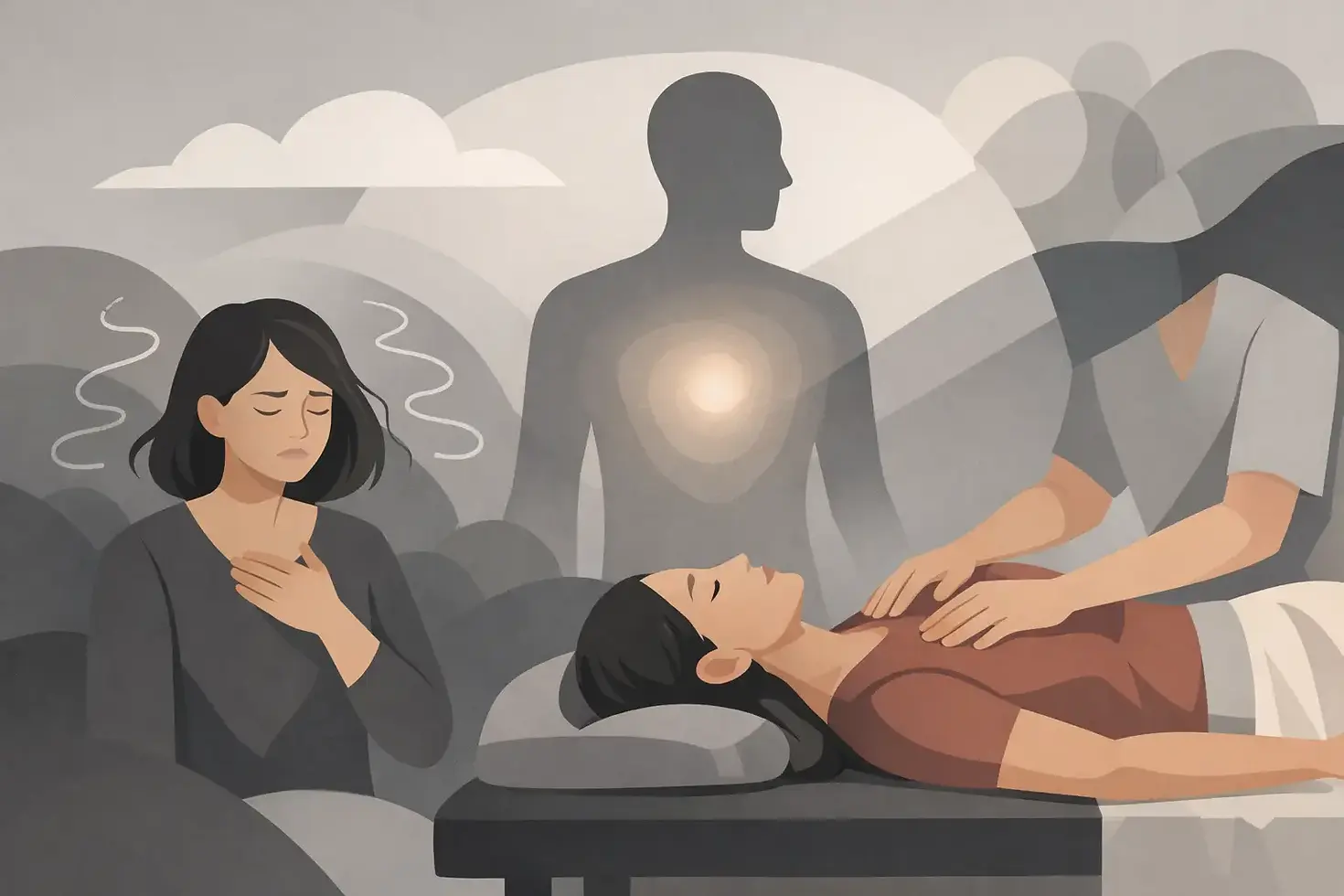
Is Bodywork Good for Anxiety? What the Body Knows

Anxiety is not only a stream of worried thoughts. It can be a jaw that never quite releases, a chest that feels held from the inside, a stomach that braces before anything has happened, or a breath that stays shallow even in a safe room. When anxiety has become organized through the body, insight alone may not always reach the places where the pattern is held.
So, is bodywork good for anxiety? For many people, thoughtful, consent-based bodywork can be a meaningful part of anxiety support. It may help create conditions for settling, sensing, and responding differently. But the quality of the work matters profoundly. Bodywork is not simply about relaxation, nor is it a substitute for appropriate mental health or medical care. Its value lies in how it helps a person meet the whole system: thought, emotion, posture, breath, muscle tone, memory, and relationship.
Why anxiety is a whole-body experience
Anxiety is often described as a mental health condition, but it is also a lived physiological experience. The nervous system detects threat, whether the threat is immediate, anticipated, remembered, or relational. In response, the body mobilizes. Muscles tighten. Attention narrows. Breathing changes. The person may become restless, numb, hypervigilant, or unable to settle after the external demand has passed.
These reactions are not signs that the body has failed. They are intelligent adaptations. A system that learned to stay prepared may continue preparing long after the original circumstances are gone. This is one reason people can understand their anxiety cognitively and still feel gripped by it physically.
Bodywork can offer a direct encounter with this dimension of anxiety. Rather than asking someone only to explain what they feel, it can help them notice how anxiety is taking shape in real time. Is the upper back working too hard? Is the diaphragm restricted? Does the body pull away from support, or collapse into it? Such observations are not diagnoses. They are entry points for understanding a pattern that may have remained outside conscious language.
Is bodywork good for anxiety when it supports regulation?
The most useful bodywork for anxiety does not force calm onto a person. It helps build capacity to recognize activation without becoming overwhelmed by it. Through skilled touch, pacing, verbal guidance, and attention to sensation, a practitioner may help a client notice small shifts: the exhale becoming more available, the shoulders lowering without being pushed, or a previously numb area becoming perceptible.
These shifts can matter because regulation is not the same as being relaxed all the time. It is the ability to move through activation, orient to the present, and return toward steadiness. A person with anxiety may need more than a pleasant treatment. They may need a space where their protective responses are treated with respect and where change occurs gradually enough to be integrated.
This is also why a purely mechanical approach can fall short. Releasing a tight muscle may feel relieving, but anxiety patterns are rarely contained in one muscle group. They are expressed through the relationship between physical tension, breath, emotional expectation, internal narrative, and the experience of being with another person. Bodywork becomes more therapeutically relevant when it works with these dimensions together.
Touch is not neutral
Touch can be grounding for one person and activating for another. For someone with a history of trauma, boundary violations, chronic stress, or dissociation, hands-on work may bring forward sensations, memories, or emotions that have been held outside awareness. That does not make bodywork inherently unsafe. It means that consent, communication, pacing, and practitioner skill are essential.
A trauma-informed practitioner does not interpret every response as resistance or push through discomfort in the name of release. They check in, invite choice, and adjust the work based on what is actually happening in the client’s system. The client should be able to decline touch, change position, pause, or stop at any time without explanation.
For some people, bodywork without direct touch may be the right place to begin. Breath awareness, movement, orienting to the room, and guided attention to sensation can all support embodied awareness while preserving a greater sense of distance and control.
What kind of bodywork may help anxiety?
There is no single modality that is right for everyone. Massage may ease accumulated muscular tension and provide a temporary sense of rest. Gentle movement practices may improve a person’s relationship with breath, posture, and physical agency. Somatic psychotherapy may help connect bodily experience with emotional and relational patterns. Hands-on work integrated with verbal guidance can be especially useful for people who want to understand not just where they hold tension, but how that holding became necessary.
The distinction is important. If someone wants a soothing reset after an intense week, a relaxation-focused session may be enough. If anxiety is longstanding, linked to relational history, accompanied by numbness or panic, or resistant to insight-oriented therapy alone, a more integrated approach may be appropriate.
At Enrootment Method, bodywork is understood as part of an interconnected therapeutic process rather than an isolated intervention. The body is not treated as a container for psychological problems, and the mind is not treated as separate from physiology. Work may include hands-on contact alongside conversation, attention to posture and breath, and careful exploration of the adaptations that organize a person’s experience.
What bodywork can and cannot do
Bodywork may help reduce felt tension, increase awareness of early anxiety cues, support sleep, and make room for emotional processing. It can also give someone a tangible experience of safety, support, or choice that is difficult to access through explanation alone. Over time, this may contribute to a more flexible nervous system response.
But bodywork is not a promise that anxiety will disappear. It cannot resolve every external stressor, replace medication when medication is needed, or serve as the only support for severe symptoms. If anxiety includes panic attacks, suicidal thoughts, significant impairment, substance dependence, or symptoms that feel unmanageable, a licensed mental health professional or medical provider should be part of the care plan. Sudden chest pain, difficulty breathing, fainting, or other acute physical symptoms require urgent medical evaluation.
The trade-off is that meaningful somatic work can take time. It asks for attention, honesty, and a willingness to notice what arises rather than chasing immediate relief. Sometimes a session leaves a person feeling calmer; sometimes it brings awareness to emotions that need further support. A responsible practitioner helps clients prepare for this possibility and offers a clear framework for integration.
How to choose a practitioner for anxiety support
Look for a practitioner who can speak clearly about consent and scope of practice. They should be comfortable explaining how they work with anxiety, what they do when a client becomes overwhelmed, and when they refer out to psychotherapy or medical care. Credentials matter, but so does their capacity to listen without imposing a story onto your body.
Before booking, consider asking whether touch is optional, how the practitioner checks for comfort during a session, and whether verbal processing is included. Notice your own response to the conversation. You do not need to feel completely at ease immediately, but you should feel respected, informed, and free to make choices.
It can also help to begin with a modest intention. Rather than asking the session to fix anxiety, you might explore one question: What happens in my body just before I begin to worry? Where do I lose contact with support? What would one percent more space feel like? Small, accurate experiences of safety and choice often create more lasting change than dramatic attempts to break through.
Anxiety often asks the body to carry an impossible amount of vigilance. Good bodywork does not demand that you let your guard down before you are ready. It offers a careful way to discover that, moment by moment, you may not have to hold everything alone.


_edited.jpg)
Comments